1
Open Structure Exposed to Rain and Hail After a Fire
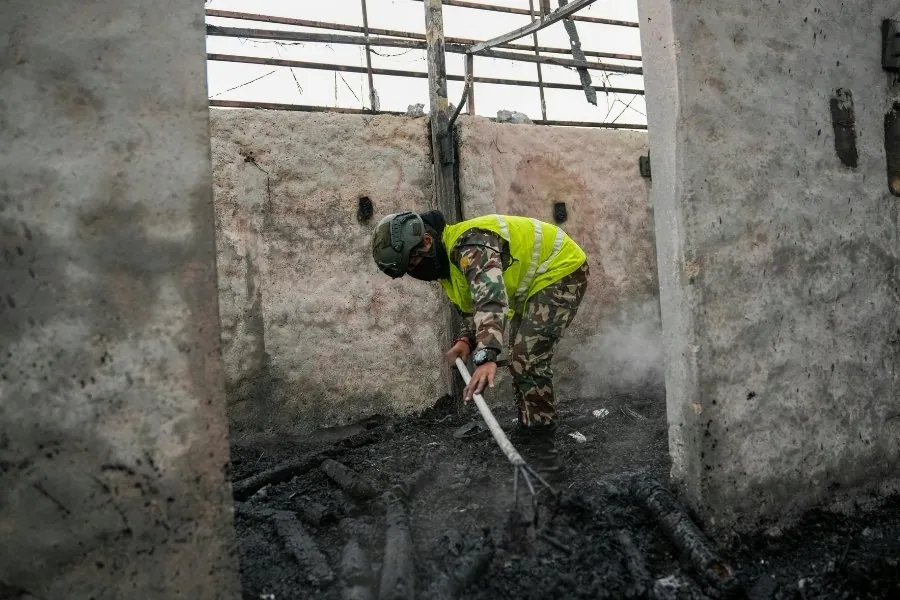
Emergency Flames and firefighting often leave holes in the roof, broken windows and doors forced open. Until those openings are boarded and tarped, the building is exposed to weather, looters and animals, and every storm adds water damage on top of the fire loss.
Why it happens here Central Oklahoma's spring storm season peaks in May and June, and large hail and heavy rain can show up within days of a fire. A roof vented by firefighters in Moore or a blown-out window in a Del City ranch can take on inches of rain overnight. Many local jurisdictions also expect damaged properties to be secured so they aren't cited as nuisance or unsecured structures. Insurers generally expect you to take reasonable steps to prevent further damage too. If you wait, the extra water damage may be harder to get covered.
Signs to watch for - Holes in the roof decking or missing shingles over burned areas
- Broken or removed windows and doors
- Water stains spreading after rain
- Debris or animals getting inside
- Neighbors or the city flagging the property as unsecured
Local patterns We see this most during spring storm season across south and east Moore and the Plaza Towers/Briarwood area. It's also common after the late-winter grassfires around Midwest City and Soldier Creek, when the next front brings wind-driven rain within the same week.
Our fix Same-day emergency board-up and roof tarping, followed by photo documentation for your insurer. That locks the property down and stops weather damage from piling onto the fire claim.
2
Firefighting Water Damage and Rapid Mold Growth
Serious Putting out a house fire can take thousands of gallons of water. That water soaks carpet pad, drywall bottoms, baseboards, insulation and subfloors. Left wet, those materials can grow mold in 24–72 hours, which creates a second, separate restoration problem.
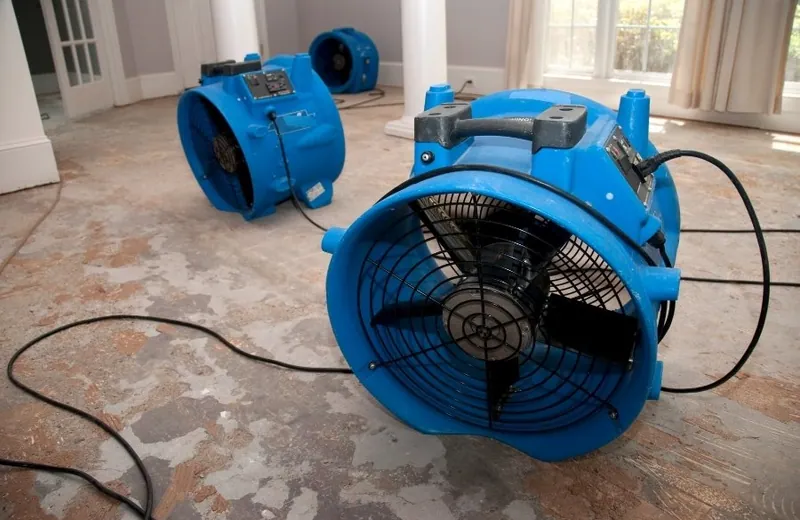
Why it happens here Most Moore homes sit on slab foundations, so water pools on the concrete under carpet and flooring and has nowhere to drain. Wall bottoms wick it upward. Add Oklahoma summer humidity and indoor temperatures that climb fast once the power is cut, and conditions for mold become nearly ideal. Because OG&E may not reconnect power until electrical repairs pass inspection, the house can't run its own AC or fans. Professional drying equipment on generator or temporary power is often the only way to dry it in time.
Signs to watch for - Squishy or soaked carpet and pad
- Swollen or delaminating baseboards
- Musty smell under the smoke odor
- Visible spotting on lower drywall within days
- Standing water on slab or in the garage
- Sagging ceilings below attic fire areas
Local patterns This is common in 1970s–2000s slab homes around Southmoore, Westmoore and Eastmoor. It's also common in older Midwest City and Del City homes, where original subfloors near wall or floor furnaces soak up water and dry slowly.
Our fix Water extraction, removal of saturated pad and drywall where needed, commercial dehumidifiers and air movers, moisture mapping and antimicrobial treatment so mold never gets a start.
3
Recurring Smoke Odor in Walls and HVAC Ducts
Moderate Smoke particles are tiny and acidic. They work into insulation, wall cavities, ductwork and porous finishes. Surface cleaning makes a room look fine, but the odor keeps coming back on humid days or when the HVAC kicks on.
Why it happens here Brick-veneer construction, the standard across Moore, Bethany and Warr Acres, leaves a hidden cavity between the brick and the framing where smoke settles. Central HVAC returns pull smoky air from the fire room through the whole house in minutes. Oklahoma's hot summers and attic temperatures over 130°F then 'bake' odor molecules back out of insulation and ducts. Smoke from nearby grassfires can also infiltrate homes the flames never reached. That's why smoke-only claims are common here after events like the March 2025 fires.
Signs to watch for - Smoke smell returns when the AC or heat runs
- Odor stronger on hot or humid days
- Gray film around supply vents and returns
- Smoky smell in closets, linens and upholstery
- Headaches or irritation after time indoors
Local patterns We see this especially in Moore and Warr Acres brick ranches after attached-garage or kitchen fires. It also shows up in Midwest City and Soldier Creek homes downwind of grassfires, where smoke got in through attic vents and HVAC intakes.
Our fix HVAC and duct cleaning, sealing or replacing contaminated insulation, then deodorizing with thermal fogging, hydroxyl or ozone treatment based on the materials and whether anyone is living in the home.
4
Acidic Soot Etching Surfaces and Contents
Moderate Soot is the oily, acidic residue left by burning plastics, wood and synthetics. Within hours it starts to discolor grout, plastics and paint. Within days it can permanently etch glass, metal fixtures, countertops and electronics if nobody cleans it properly.
Why it happens here Modern furnishings and the vinyl trim common on Moore homes burn into heavy, greasy soot. Kitchen fires, the most common household fire, add grease to the mix. Oklahoma red brick, stone fireplaces and the exposed timber in Bricktown and Automobile Alley lofts are porous and soak soot up instead of letting it wipe off. Wiping with household cleaners usually smears soot deeper into those surfaces, which makes professional dry-sponge and chemical cleaning far more effective when it starts early.
Signs to watch for - Black or brown webs in corners (soot tags)
- Yellowing on plastics and appliances
- Dark smudges that smear when touched
- Pitting or cloudiness on glass and chrome
- Discolored brick, stone or grout
- Greasy film on cabinets and walls
Local patterns Common in kitchens across suburban Moore and Bethany, in brick fireplace surrounds in older Warr Acres and The Village homes, and in exposed-brick lofts and restaurants in Bricktown and Uptown.
Our fix Surface testing, then dry soot sponging, HEPA vacuuming, alkaline or solvent cleaning matched to each material, and specialized masonry cleaning for brick, stone and timber.
5
Fire-Damaged Wiring, Gas Lines and Structure
Serious Heat can char studs, joists and roof trusses. It also melts wire insulation and weakens gas connections, even in rooms that look only smoke-stained. Hidden structural and utility damage makes the building unsafe and has to be repaired before utilities are restored.
Why it happens here Many homes in Del City, Midwest City, Warr Acres and The Village still have 1940s–60s electrical systems: ungrounded circuits, Federal Pacific or Zinsco-era panels and some aluminum branch wiring. Those systems often started the fire, and they rarely survive it. Expansive red clay soils and the metro's induced earthquakes can stress gas connections and chimneys. Capitol Hill's balloon-framed bungalows let fire climb hidden wall cavities into the attic. Repairs require CIB-licensed trades, permits, an ONG pressure test and inspection before OG&E reconnects power.
Signs to watch for - Charred or blackened framing behind drywall
- Breakers that trip or outlets that are warm
- Melted outlet covers or switch plates
- Gas smell or a utility shutoff tag
- Sagging roof lines or soft floors
- Cracked chimney or firebox
Local patterns Most frequent in Tinker-area and Sooner Road corridor homes in Midwest City and Del City, NW 50th & MacArthur homes in Warr Acres, and older bungalows off S. Robinson in Capitol Hill.
Our fix Structural assessment, selective demolition, framing repair, and coordination with licensed electrical, plumbing and HVAC trades through permits and inspections so utilities can be safely reconnected.
6
Commercial Kitchen and Multi-Tenant Smoke Spread
Serious Restaurant and commercial fires leave grease-laden soot in hoods, ducts and dining areas. In older shared buildings, smoke moves through party walls, elevator shafts and common ductwork, so tenants who never had flames end up with damage too.
Why it happens here Downtown, Bricktown, Uptown and Stockyards City are full of early-1900s brick warehouses and heavy-timber buildings that now house restaurants, bars, lofts and retail. Old ductwork and shared walls weren't built to stop smoke migration. Porous brick and exposed timber hold odor. Owners also need to reopen fast. Every closed day costs revenue, and family-run businesses along Agnew and Exchange can't absorb long downtime. Historic district rules may also limit how exterior repairs are done.
Signs to watch for - Grease film on walls, ceilings and equipment
- Smoke odor in neighboring units or upper floors
- Soot in hood systems and exhaust ducts
- Stained exposed brick or timber beams
- Tenant complaints after a fire next door
Local patterns Concentrated in Bricktown and Downtown restaurant rows, Automobile Alley/Midtown mixed-use buildings, Stockyards City eateries and western retail shops, and the brick storefronts along Commerce Street in Capitol Hill.
Our fix Phased commercial cleanup scheduled around operations: degreasing, duct and hood cleaning, containment between tenants, masonry soot removal and odor control, with documentation for the property owner and insurer.
7
Minor Appliance, Dryer or Grill Fire Residue
Minor Small, contained fires from a dryer vent, microwave, outdoor grill or fire pit may only scorch one area. They still leave smoke film, odor and soot that spread farther than most people expect.
Why it happens here Suburban Moore and Bethany homes with attached garages, back patios and grills see a lot of these small fires, especially during dry, windy spring and summer weather. Lint-clogged dryer vents running through hot attics are another common culprit. During ice-storm outages, space heaters and candles cause small fires too. These seem manageable, but HVAC systems carry the residue house-wide, and a quick professional cleaning costs far less than living with lingering odor.
Signs to watch for - Smoke smell in one or two rooms
- Light soot on nearby walls or ceilings
- Scorched siding, soffits or eaves near a grill
- Discolored dryer vent or laundry room ceiling
- Odor in clothing and soft goods
Local patterns We see this often in Westmoore and Southmoore garages and patios, around the NW 39th Expressway corridor in Bethany, and during winter outages in older Del City and Warr Acres homes.
Our fix Targeted soot cleaning, deodorization of the affected area, HVAC filter and vent cleaning, and content cleaning so a small fire doesn't leave a lasting odor.